Systems thinking is a holistic approach to sustainable problem solving. It emphasizes multiple linkages and interrelationships between various elements that make up an entire system. elements are comprised of social, environmental and economic conditions. instead of viewing the plastic problem as simply a linear problem, there are a multitude of variables that caused plastic pollution and limit possible solutions. By looking at four areas, the causes, solutions, impacts, and limitations of the plastic problem, I am able to account for all the moving parts of the plastic problem as a whole.
Plastic is choking our oceans, our rivers, our planet. Part of Muhlenberg Colleges Center for Ethics series, “Crisis Earth, the era of the Anthropocene” had Susan Shaw, an American environmental health scientist, ocean conservationist, and founder of Shaw Marine and Environmental Research Institute speak on her work studying toxic chemical exposures, specifically micro plastics impacts on human health and wildlife. Shaw states “Micro plastics are the most abundant form of solid-waste pollution on Earth and are one of the most critical ocean pollution concerns of our time.”. Her research focuses on micro plastics in Maine and found the devastating measurement of an average of 17 plastic fragments in every liter of seawater. The impacts of such large quantities of plastic fragments found in the ocean is one point of systems thinking.
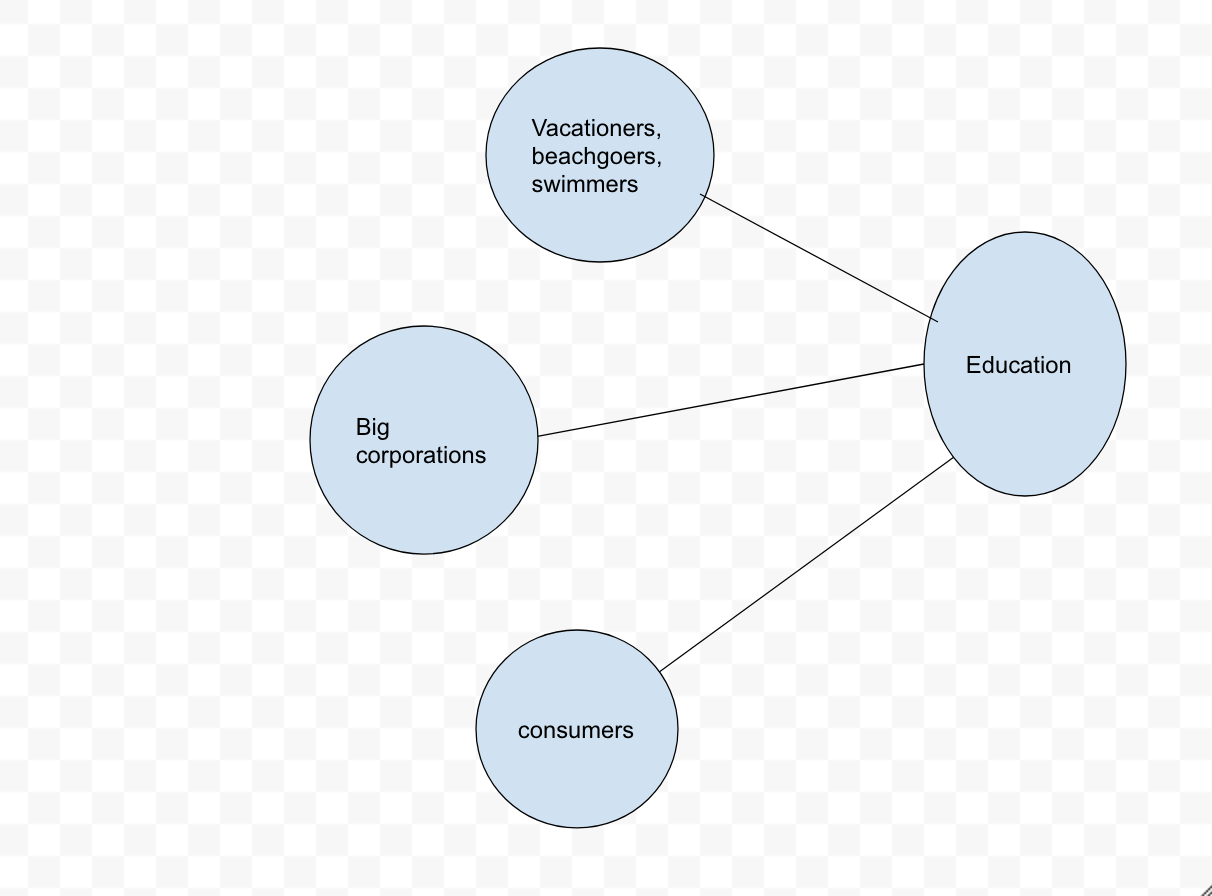
Based on the systems analysis below, I was able to identify these relationships and interactions that seem to be the most accurate and important to gain insight and analyze in order to completely understand the scale of the problem of plastic pollution. For example, when looking at a possible solution such as eliminating plastic through policy banning or taxing, I found a direct impact on stakeholders like big businesses who depend on making their profits and livelihoods on the cheapness of plastic for manufacturing. In addition, unintended consequences on poor people who can’t afford more expensive plastic alternatives, banning of plastic bags would be forced to pay the 5 cents tax on plastic bags. Moreover, an overarching limitation to reducing plastic is the engrained plastic culture in the world. it has become the societal norm and that is hard to change. This in linked the cause of the economic treadmill of production which is an outcome of capitalism. However, a surprising and exciting linkage is between education and its positive impacts on almost all of the components making up the impact category of the systems thinking diagram. The intersection between education and the stakeholders impacted are interrelated. If big corporations are educated on sustainable alternatives that can in the long run save them money, they too will want to reduce their plastic production, packaging. Tourists, vacationers, beachgoers, consumers can all change their consumption habits if educated. Therefore, education seems to be the most sustainable solution to plastic pollution.