The Non-Sustainable Life of Plastics and the Negative Impacts Plastic Pollution Has on the Environment and Society

The invention of plastic at first may have seemed like it solved all of man’s problems, but now it has become all of man’s problems. From the shrink wrapping around the  bananas in the grocery store, or the plastic fork you just threw away, or the Lego you played with as a child, all of that is plastic. But what happened when you tore the wrapping off the fresh banana, or the fork when you were finished with your salad, or the Legos when you decided you were too old to play with? Plastic, nearly 91% of it ends up in the dump, or the river, or the ocean, or in the water you are now drinking or the salmon you just had for lunch.[i] Plastic doesn’t just stay whole, it breaks down and fragments into much smaller, finer particles. It is both the small micro plastics and the large plastic pollution that are changing our ecosystems and costing our society our health and well-being.

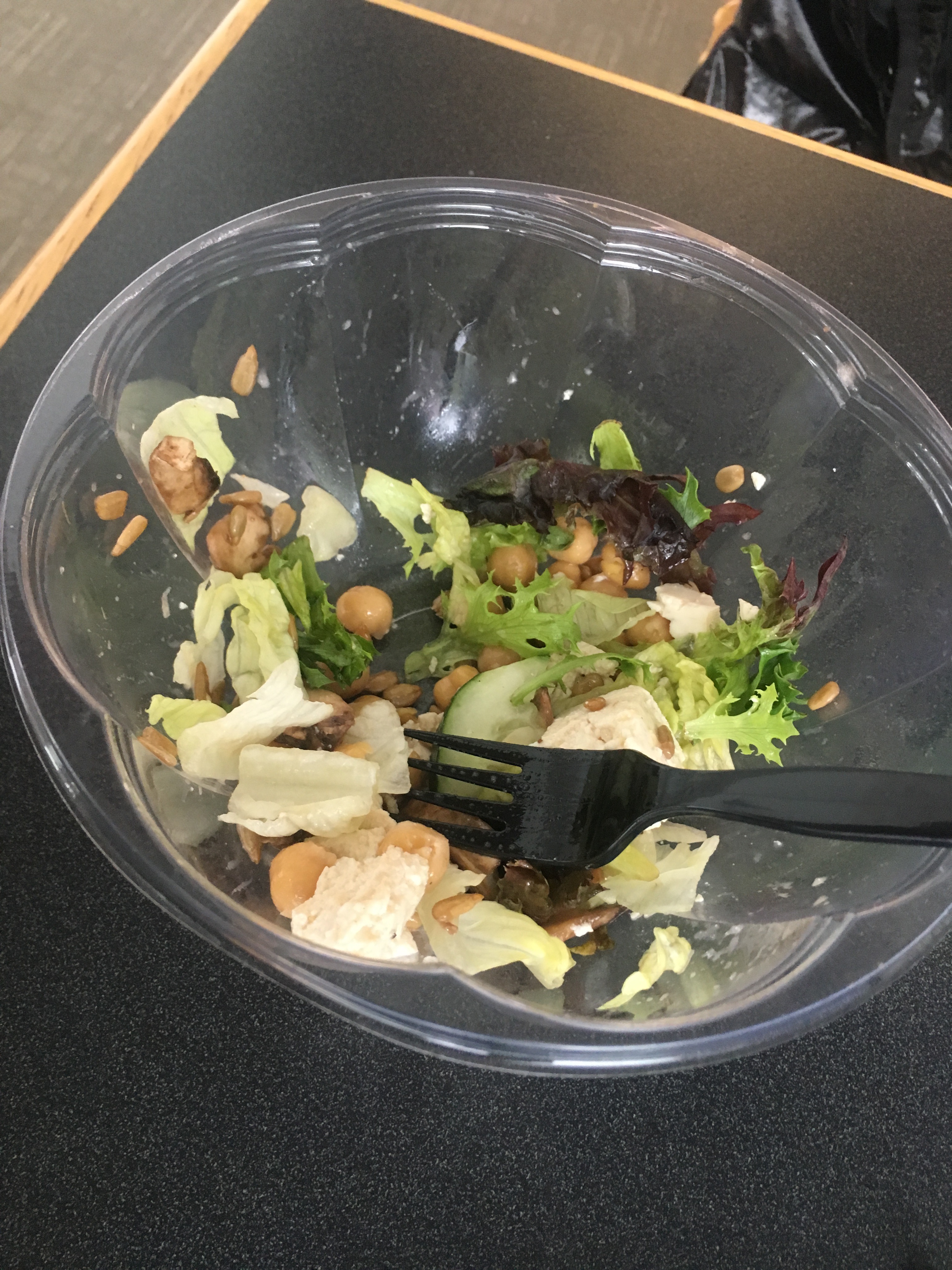
My personal photo of a plastic fork and plastic bowl I threw away after eating my salad vs my reusable water bottle that is more sustainable than a plastic single use alternative.
Micro plastics are defined as being less than 5mm and accumulates and deposits into sea beds, pristine sediments, and ocean surfaces. [ii] However, the ubiquitous micro plastics and larger plastic pollution do not remain in the same water that it enters. Because of ocean currents, plastic is present from pole to pole; in the waters off industrial communities and the waters off of the most “pristine” landscapes untouched by humans.
What makes plastic so wide spread and popular are its malleability and flexibility to be molded into any product[iii]However, the cradle to grave cycle of plastic production is not sustainable and is not beneficial to our planet, people, or profits in the long term. From the beginning stages of production, nonrenewable resources are used such as oil and petroleum in which this relates to furthering global warming and climate change with the excessive release of CO2. During the production of PHB, extremely high amounts of energy and water is used as well as acids and other chemicals that add to the toxic chemicals that are used in producing plastics. In addition, the wastewater released after production which is also toxic to the environment and can cause great environmental damage[iv] Larger plastics that enter the oceans have been documented to be the source of the deaths of over 100 million marine animals each year[v]Micro plastics enter the food chain from the very base of primary producers and make its way up to the highest trophic level animals[vi] Plastics are often made with endocrine disruptors such a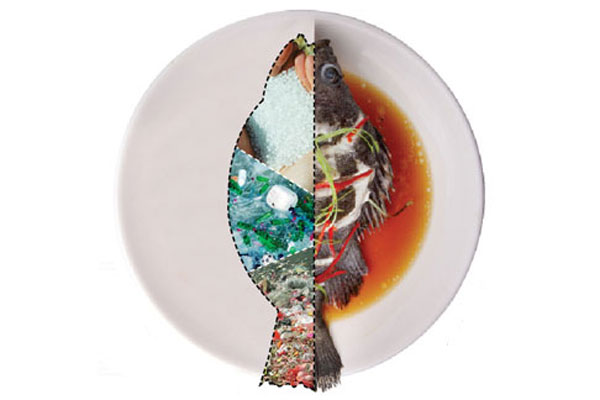 s BPA and DEHP, all chemicals that are harmful when humans are exposed.[vii]This is a problem not only for the animals but for humans alike. In only the U.S. fisherman caught 9.7 billion pounds are fish and shellfish for market for the year of 2015 [viii]Fisheries are important to the US economy as they support over 1.8 million jobs. If the fish humans consume have micro plastics in their body, then humans who consume these fish will uptake the micro plastics as well. Americans who on average consume 15.5 pounds of seafood are putting their health at risk[ix]. An estimated 6.3 billion tons of plastic waste has been generated in the year 2015 and this number is expected to reach 12 billion tons by 2050.[x] Approximately 10 million tons of plastic enters our oceans each year, an alarming statistic that humans need to acknowledge and take action on.[xi]
In an era of the Anthropocene, it is vital to view our earths condition honestly, the planet is in a state of crisis, and that means us inhabitants, animals, marine ecosystems are all too. In the next three months I hope to find out the differences between our consumer needs and wants in order to create a realistic, affordable, and viable sustainable solution to plastic. I mean if humans were okay 3 hundred years ago without plastics and lived out there lives, then I believe with some heightened education, interactive initiatives that incorporate ideas from diverse stakeholders, and a little help from worldwide efforts and governments, a sustainable solution to plastic pollution is on its way to become a reality.
Based on our class definition of sustainability:
Something is sustainable if it’s initiatives, actions or impacts serve to meet the social and economic needs of the present and the future without exceeding planetary boundaries. This is best achieved using an inclusive and transparent process based on scientific principles that ensures:
- resource use that maximizes renewal, encourages re-use, and minimizes waste while protecting and restoring the health of natural systems, all organisms and biodiversity; and reducing pollution and mitigating global climate change;
- ethical economic development that promotes equitable opportunity and empowers rather than exploits people and the environment, and does not undermine peoples’ capacity to meet their own needs; and
- an elevated standard of human well-being for all people including but not limited to improved health and increased equitable access to basic human rights.
Best practice for meeting these objectives include using an inclusive process with transparent governance; and assessment through the development of measurable indicators that show improvement in each of the above criteria.
My objectives for solving the problem of plastic pollution are to address the following criteria because as of now plastic products
- Do not use all renewable resources, does not minimize waste, does not protect natural ecosystems, instead actually alters the biological makeup of the animals and marine organisms that ingest the plastics
- Plastic pollution is unethical because it is putting human and environmental welfare at risk
- Plastic pollution does not create an economic benefit if it harms the fishing industry and the 1.8 million jobs in the U.S. that are dependent on the health of the marine ecosystem
My mission is to help address these issues by understanding the barriers the plastic industry faces and how to create and highlight sustainable alternatives and solutions.

http://designtekplastics.com/tips/the-life-cycle-of-plastic/plastic-life-cycle/
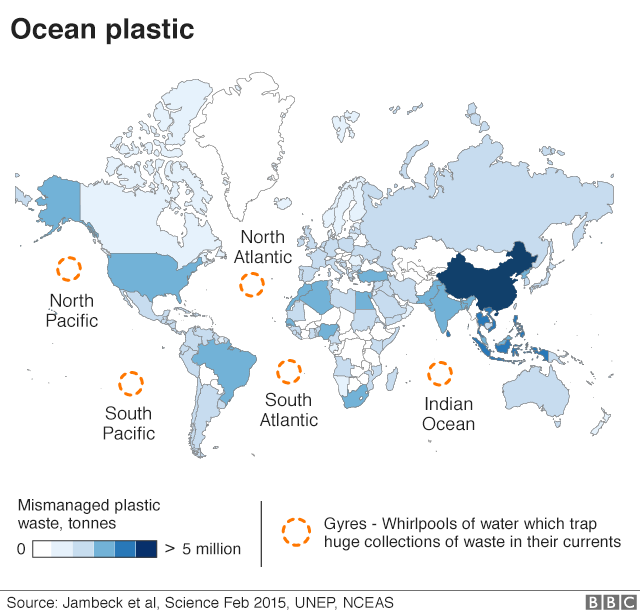 Picture source
[i] Laura Parker “Here’s How Much Plastic Trash Is Littering The Earth”National Geographic https://news.nationalgeographic.com/2017/07/plastic-produced-recycling-waste-ocean-trash-debris-environment/
[ii] Ivar Do Sul JA, and Costa MF. “The Present and Future of Microplastic Pollution in the Marine Environment.” Environmental Pollution (barking, Essex : 1987) 185 (2014): 352-64. doi:10.1016/j.envpol.2013.10.036.
[iii] IBID
[iv] Harding, K.G, J.S Dennis, H. Von Blottnitz, and S.T.L Harrison. “Environmental Analysis of Plastic Production Processes: Comparing Petroleum-Based Polypropylene and Polyethylene with Biologically-Based Poly-Β-Hydroxybutyric Acid Using Life Cycle Analysis.” Journal of Biotechnology 130, no. 1 (2007): 57-66. doi:10.1016/j.jbiotec.2007.02.012.
[v] Sea Turtle Conservancy. “Information About Sea Turtles: Threats from marine Debris
https://conserveturtles.org/information-sea-turtles-threats-marine-debris/
[vi] Ivar Do Sul JA, and Costa MF. “The Present and Future of Microplastic Pollution in the Marine Environment.” Environmental Pollution (barking, Essex : 1987) 185 (2014): 352-64. doi:10.1016/j.envpol.2013.10.036.
[vii] “Plastics and Environmental Health: The Road Ahead,” Rolf U. Halden and Emily J. North, Janurary 2014.
[viii] NOAA “Americans Added Nearly 1 Pound of Seafood to Their Diet in 2015”. https://www.noaa.gov/media-release/americans-added-nearly-1-pound-of-seafood-to-their-diet-in-2015.
[ix] IBID
[x] BBC Science and Environment“Seven Charts That Explain the Plastic Pollution Problem”.https://www.bbc.com/news/science-environment-42264788
[xi] IBID
